
Soil Diseases

Fusarium Blight (Necrotic Ring Spot) - are dark red sunken patches (15-30 cm) at first.
They then proceed to turn tannish-brown and die.


Solution - Aeration, proper watering practices and fertilizer are all essential to help the turf recover and promote new growth.

Leaf Spot - is a leaf disease that can occur throughout the growing season when the humidity is high and the temperatures are above 21°C. It is characterized by small black spots on grass blades that grow to larger tan spots. These spots grow until the leaf is killed. As the grass dies, it appears to be suffering from drought stress. These final stages of Leaf Spot are called "Melting Out."


Solution - Proper watering and cutting practices are essential to relieve your turf of the symptoms.

Fairy Ring - Fairy rings are very distinctive. They consist of 2 rings of dark green, lush grass, one inside the other. Inside each of the 2 dark green rings are rings of dead grass creating a bulls-eye type formation.

Solution - Aeration, supersaturating the soil and removal of sod and soil are the options available to rid you lawn of this disease.

Powdery Mildew - is a disease that usually develops in shady areas with poor air and water conditions, such as the side of your house. The grass blades form a white powdery cast on them. The grass is seldom killed by Powdery Mildew but makes it susceptible to other disease.

Solution - Aerating and reducing shade (by pruning, for example) will help make conditions unfavourable for this disease.

Grey Snow Mould - occurs in lawns in the early spring after the snow melts. Greyish-tan patches ranging in size from 7.5 - 30 cm appear, but often overlap to form larger patches.

Solution - Raking the infected areas will break up the disease spores and reduce thatch and improve air circulation in the thatch layer. This will allow the disease to dissipate. A fertilizer treatment also helps to promote new growth in these areas.

Pink Snow Mould - occurs in lawns in the early spring after the snow melts. Reddish-brown patches 10 - 20 cm in size appear, but often overlap to form larger patches.

Solution - Raking the infected areas will break up the disease spores and reduce thatch and improve air circulation in the thatch layer. This will allow the disease to dissipate. A fertilizer treatment also helps to promote new growth in these areas.

Rust -usually develops in lawns that are not being cut and watered properly. Small reddish-brown balls form on the leaf blade and can be rubbed off easily. Severe attacks can result in yellowing and wilting of the grass blades.

Solution - Proper watering and mowing practices are essential to improve leaf growth. A fertilizer treatment will promote fresh growth.

Slime Moulds - are organisms that do not cause disease but are unsightly. Slime Mould appears as a dark film on the grass blade forming small irregular patches in the turf.

Solution - Vigerous raking or washing grass with water should remove spore masses.

Insects

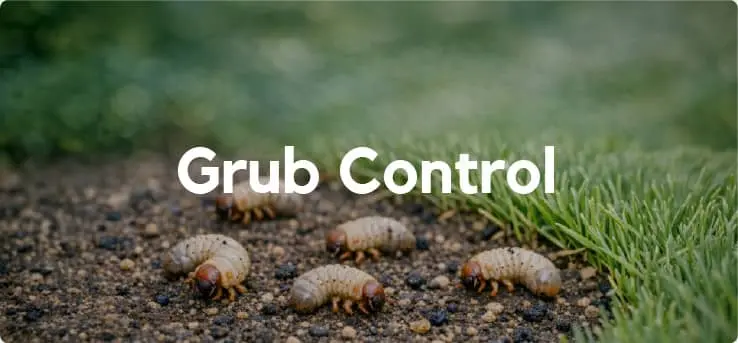
White Grubs (European Chafer, May and June beetles) - are small, plump, white larvae that look like white worms. They live in the soil and ferociously chew on grass roots. The earliest signs of infestation are the emergence of yellowish-brown patches in your turf. The damaged turf can be pulled back like a carpet and will be susceptible to scavenging animals such as skunks and racoons in search of grubs for food. Once grubs are found in a location, these habitual animals will come back year after year searching for grubs again, whether they are present or not. White Grubs can cause extensive damage, requiring expensive lawn renovation, if not treated properly. White Grubs damage the lawn in Spring or Fall.

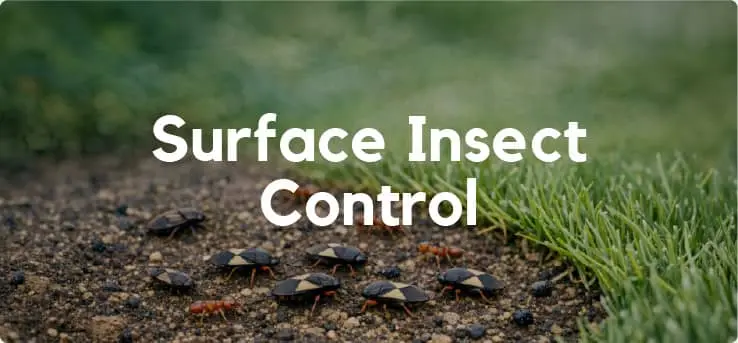
Chinch Bugs - are small insects with piercing mouthparts that suck the sap from the grass. They live in the thatch layer of your lawn and can cause extensive damage in as little as three weeks. They become active during hot, dry weather, usually in July. Chinch Bug damage is characterised as dead sunken patches in the lawn. These patches are often mistaken for dried out, or drought stressed areas. However, watering will not recover the affected turf. The young chinch bugs (nymphs) are bright red and as they mature they darken in colour until they are black with a white band on its back. Adult chinch bugs (5mm in size) will continue to feed on the lawn until Late August, when they begin searching for protected areas to overwinter.

Sod Webworm - The adult Sod Webworm are small tan moths (about 1 cm long) that lay their eggs in turf in late May and June. They can be seen flying around the grass when disturbed by walking. A worm is hatched from the egg and begins to feed on the grass blade. A good indication of Sod Webworm activity is the web that is formed over the area that they are feeding in. These webs are usually seen first thing in the morning. Damage usually appears looking like scattered, irregular brown patches of turf. People often assume that the dry damaged grass requires watering to restore the lush green appearance. The dead patches of grass pull away easily revealing silk-like green excrement pellets left by the worm. In September, severe damage may appear if the population builds up throughout the summer.

Other Conditions

Mushrooms
- are the reproductive part of the fungus, which live on the rotting organic material of buried wood and rotting tree roots. They can also be caused by poor soil condition. They emerge when the temperature and moisture are just right for their development. Weed control has no effect on mushrooms.

Solution - If mushrooms are present because of buried wood or rotting tree roots under the soil, these can be removed. If the problem is due to poor soil conditions, a granular liming treatment and or an aeration will help to reduce the mushrooms over a period of time.

Moss
- is usually present in areas of the lawn that have low fertility, excessive shade, poor air circulation, low pH and poor soil drainage. In most cases, pruning back the shrubs and trees will help to increase sunlight and improve air circulation.

Solution - Aeration will help to improve soil drainage and a liming application will help to adjust the soil pH.

Winter Injury - appears in the spring as straw coloured grass.

Solution - Raking, aerating and fertilizing, in the spring, will help to promote new growth in these areas. Also, in the fall, the last mowing should be cut as short as possible without scalping the turf.

Drought Stress - occurs during the hot summer months when the turf is not getting adequate moisture. In the beginning of Drought Stress, the lawn changes its colour from dark green to a blue-gray colour and then turns yellow.

Solution - Proper watering practices are essential to prevent this. It takes almost twice the amount of water to bring your lawn out of drought stress as opposed to regular watering.

Dog Damage - is caused by the increased salt content in the urine of dogs, especially female dogs. The damage is characterized by a brown dead spot in the middle of lush, dark green, fast growing grass.

Solution - The best way to limit the damage is to change the place where the animal urinates, so that it is not on the lawn. Another technique is to immediately after the dog has urinated, hose down the area with water, dispersing and watering down the urine. Granular lime applied in the damaged areas will help to bring the soil pH back in line and reduce damage.

Soil Compaction - is caused by the lack of soil and heavy traffic due to people walking or playing on the lawn. Compacted soil doesn't readily allow water and nutrients to penetrate the deeper root zones where it's needed. Compacted soil does not allow the roots to develop in the soil as easily and can also promote or cause some diseases. The shallow and weak root development it causes in your lawn will also cause it to thin out.

Solution - An aeration done once a year will help to keep your soil loose and avoid these problems.

Dull Mower Blade - is a very common problem in lawns. If the mower blade is dull, it will tear off the grass blade instead of giving it a clean cut. This increases the chances of disease infection and leaves a brown tinge to the lawn.

Solution - The mower blade should be sharpened three times a year, to prevent this condition.

Thatch Build-Up - is a layer of living and dead plant matter (i.e. roots, grass and clippings). Thatch is located just beneath the grass blades and on top of the soil. It acts like a sponge, holding moisture in the soil, causing the lawn to rot and cause disease. If the lawn has excessive thatch, it will not receive the proper water, air and nutrients to maintain a green colour and eventually the grass begins to thin out.

Solution - Aeration will reduce the thatch to acceptable levels. In severe cases, a dethatching may be necessary.

Lawn Care Tips

Mowing - A properly mowed lawn is cut at 2 ½ - 3'' every week. A higher cutting height results in a stronger, deeper root system. No more than 1/3 of a grass blade should be removed with each mowing and lawn clippings should be removed only if they are long. Changing direction with each mowing will allow the grass to grow strong and straight, while reducing weed grass infestation. The mower blade should be sharpened three times a year to prevent grass blade injury and the development of diseases. Mowing should be done mornings only, once the morning dew has dried up, to give the grass blade a chance to seal the cut before nightfall. Avoid mowing too often during periods of drought stress.

Watering - One very important element to maintaining a beautiful lawn is to water in the morning. Avoid late afternoon or evening watering, as it will promote the development of diseases, which can severely damage your lawn. The recommended time to water is 2 - 3 times a week with approximately 1" - 2" inches of water (2.5 - 4 cm) (depending on the weather). Water regularly, before the lawn develops drought stress. Ensure a deep and thorough watering, allowing the water to soak into the soil. Move your sprinkler occasionally to prevent puddling or run-off.